
 Mishima
Mishima Taisha
The shrine where Minamoto no Yoritomo prayed before raising his army. The fragrant olive in its grounds is said to be 1,200 years old and is a Natural Monument.
See detailsJAPAN
Unwind between Fuji and the sea.
Pick a category that interests you and find the trip that suits you.
PICK UP
From entries with clearly licensed photos.
MishimaThe shrine where Minamoto no Yoritomo prayed before raising his army. The fragrant olive in its grounds is said to be 1,200 years old and is a Natural Monument.
See details Fujinomiya
The head shrine of all Sengen shrines in Japan. Everything above the eighth station of Mount Fuji is held to be the grounds of this shrine. The idea that the mountain itself is the deity reaches as far as the form of land ownership.
See details Shizuoka
A collective name for three shrines. Held to be where Ieyasu came of age, its lacquered halls have earned it the name Nikko of the Tokai.
See details Izu
IzuKukai is said to have struck the rock with his vajra and brought the water up. The beginning of Shuzenji Onsen.
See detailsIntroduced by city, ward, town and village within the prefecture.
ShizuokaShrines & Temples, Art & Crafts · 18 entries HamamatsuShrines & Temples, Art & Crafts · 15 entries
 AtamiShrines & Temples, Architecture · 9 entries
 FujinomiyaShrines & Temples, Museums · 5 entries
 MishimaShrines & Temples, Art & Crafts · 5 entries
 KakegawaShrines & Temples, Art & Crafts · 5 entries
 FEATUREShizuoka now (autumn)Autumn colors brighten Sumatakyo Gorge and Shuzenji.See the feature 663highland · CC BY-SA 4.0
Check information useful for planning, for a fuller trip.
JAPAN GUIDE
No worries even on a first trip to Japan. Useful things to know, explained clearly.
See all guidesThis answer is a draft. It stays unpublished until legal review and source verification are complete. The answ…
Read the answer →This answer is a draft. It stays unpublished until legal review and source verification are complete. The answ…
Read the answer →This answer is a draft. It stays unpublished until legal review and source verification are complete. The answ…
Read the answer →REGIONAL SPECIALTIES
It is not only the big cities. The regions are full of charm, and special experiences you can only have in each place are waiting.
Value Village
Regional culture, tradition, food, sightseeing, nature and people. A directory that delivers the appeal of each to the whole world.
About Value Village
INSTAGRAM / 6
Local governments, tourism accounts and local posts are shown with official embeds. Photos are not stored on Value Village; they link to the original posts.
THINGS TO DO / 6
Choose from what you can only do here.
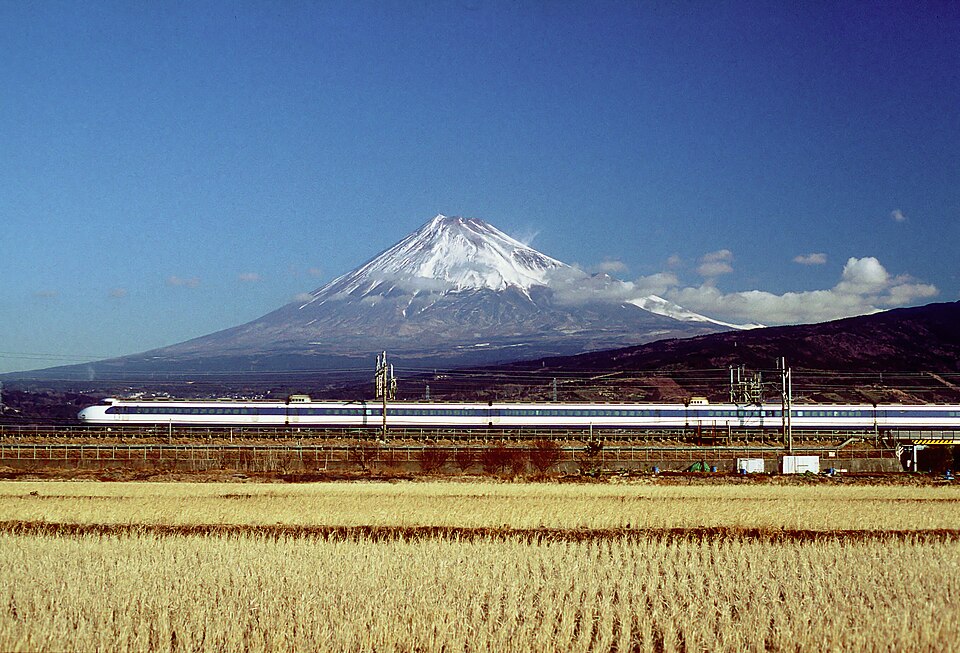
01View Mount FujiAdmire Mount Fuji from classic viewpoints such as Miho no Matsubara and Nihondaira.See related entries →Ogiyoshisan · Public domain 02Visit the Tea FieldsWalk through green plantations and savor the aroma and flavor of Shizuoka tea.See related entries →久保嶋宏明 · CC BY-SA 3.003Soak in Izu OnsenRelax at an Izu hot spring overlooking the coast or mountains.See related entries →Ennui · CC BY-SA 3.0
 04Ride the Oigawa RailwayRide heritage trains through tea country and dramatic river valleys.See related entries →Tkbkagawa · CC BY-SA 4.005Visit Kunozan ToshoguSee the ornate shrine dedicated to Tokugawa Ieyasu and views over Suruga Bay.See related entries →Ennui · CC BY-SA 3.0
 06Explore Lake HamanaEnjoy lakeside scenery, cruises and cycling around Lake Hamana.See related entries →V&7 · CC BY-SA 3.0
NEED TO KNOW
BEST TIME TO TRAVEL
 Sablier de Verrie · CC BY-SA 4.0
Kawazu cherry blossoms and fresh-green tea fields herald an early spring.
See recommendations for this season → Raphael Koh dreamevile · CC0
Summer brings prime conditions for Izu beaches and climbing Mount Fuji.
See recommendations for this season →663highland · CC BY-SA 4.0Autumn colors brighten Sumatakyo Gorge and Shuzenji.
See recommendations for this season → Ahia · CC BY 2.0
Clear winter air offers striking views of snowcapped Mount Fuji.
See recommendations for this season →LOCAL FOOD / 12
What people have long eaten in this place. We collect the dishes themselves, not restaurants.
Black hanpen fish cake, beef tendon, daikon, konjac, egg and kombu are skewered and simmered for two to three hours in the broth from the beef tendon and a dashi of shaved dried fish. Green laver and powdered dried fish are sprinkled on before eating.
Area:Shizuoka
Source:Ministry of Agriculture, Forestry and Fisheries (MAFF), "Our Regional Cuisines"
Gray black hanpen, a fish cake made from mackerel, sardines and other fish ground into paste, coated in wheat flour, beaten egg and breadcrumbs and deep-fried.
Area:Yaizu
Source:Ministry of Agriculture, Forestry and Fisheries (MAFF), "Our Regional Cuisines"
Wild yam is grated and ground in a mortar, then thinned with dashi seasoned with miso and soy sauce. It is poured over rice, with green onion or nori scattered on top to taste.
Area:Central area (Shizuoka)
Source:Ministry of Agriculture, Forestry and Fisheries (MAFF), "Our Regional Cuisines"
Pickles made by finely chopping wasabi stems and root, rubbing them with salt, squeezing out the moisture, then working them into sake lees mixed with sugar and salt and leaving them for a few days to develop pungency.
Area:Central area (Shizuoka), Izu Peninsula (Izu), eastern area (Gotemba, Oyama)
Source:Ministry of Agriculture, Forestry and Fisheries (MAFF), "Our Regional Cuisines"
Raw sakura shrimp lightly combined with mitsuba, wheat flour and water, shaped into a patty and deep-fried in hot oil.
Area:Shizuoka
Source:Ministry of Agriculture, Forestry and Fisheries (MAFF), "Our Regional Cuisines"
Raw, uncooked shirasu (whitebait) served on rice with shredded nori, wakegi (a slender green onion) and wasabi, with soy sauce poured over.
Area:From the western area (Maisaka, Hamamatsu) to the central area and the eastern area (Shizuura, Numazu)
Source:Ministry of Agriculture, Forestry and Fisheries (MAFF), "Our Regional Cuisines"
A rice cake sweet made by grilling mochi, briefly dipping it in hot water to soften it, and coating it with roasted soybean flour mixed with sugar and salt.
Area:Shizuoka
Source:Ministry of Agriculture, Forestry and Fisheries (MAFF), "Our Regional Cuisines"
The seaweed tengusa is boiled in water with vinegar added, the strained liquid is poured into a mold and chilled until set, then pushed through a press into thin noodle-like strands. It is eaten with sanbaizu vinegar dressing or brown sugar syrup.
Area:Toi (West Izu), Inatori (East Izu)
Source:Ministry of Agriculture, Forestry and Fisheries (MAFF), "Our Regional Cuisines"
Splendid alfonsino with the scales and innards removed, placed with burdock in a simmering liquid of water, sake, sugar and soy sauce, covered with a drop lid and cooked while the liquid is spooned over it.
Area:Shimoda, Higashiizu (Inatori)
Source:Ministry of Agriculture, Forestry and Fisheries (MAFF), "Our Regional Cuisines"
Horse mackerel filleted into three pieces, with the bones and skin removed, chopped and placed on rice with green onion, ginger and shiso alongside, then hot dashi seasoned with soy sauce and salt is poured over it.
Area:Ito, Izu area
Source:Ministry of Agriculture, Forestry and Fisheries (MAFF), "Our Regional Cuisines"
Sweet potatoes steamed with the skin on for about ninety minutes, peeled while still hot, sliced thinly lengthwise and dried in the sun for five to seven days.
Area:Omaezaki, Shimada, Yaizu
Source:Ministry of Agriculture, Forestry and Fisheries (MAFF), "Our Regional Cuisines"
A cold soup made by chopping the flesh of bonito or similar fish with a knife, adding miso and pitted pickled plum and chopping further, thinning it with ice water, and floating onion, cucumber and shiso on top.
Area:Omaezaki
Source:Ministry of Agriculture, Forestry and Fisheries (MAFF), "Our Regional Cuisines"
MICHI-NO-EKI / 27
Rest facilities registered by Japan's national government. Each has parking and toilets open 24 hours, and by definition includes a facility that sells local products. This is where the making and the food of this prefecture can actually be bought.
There are 27 stations in this prefecture in all (national registry).
LOCAL ACCOUNTS / 2
Japanese-language accounts that post about this area.
These are third-party accounts. They are not affiliated with Value Village and this is not an endorsement.
CITIES & TOWNS / 22
Sorted by number of entries. Start from the name of a town.
INTERESTS / 14
Only the interests found in this prefecture.
Hitoana · Ennui · CC BY-SA 3.0Hitoana / Fujisan Hongu Sengen Taisha
To the list Mt. Fuji · Ekki3 · CC BY-SA 4.0
Mt. Fuji / Kawazu Nanadaru
To the list Atami Onsen · 663highland · CC BY-SA 4.0
Atami Onsen / Shuzenji Onsen
To the list Numazu Port · 木林森 · CC BY-SA 3.0
Numazu Port / Ryugashido Cave
To the listNirayama / Sunpu-jo
To the list Kakegawa-jo · inunami · CC BY 2.0
Kakegawa-jo / Kiunkaku
To the list Toro Site · Vihiqebia · CC BY-SA 3.0
Toro Site / Mt Fuji World Heritage Centre, Shizuoka
To the list Shizuoka Prefectural Museum of Art · Hsinhuei Chiou · CC BY-SA 4.0
Shizuoka Prefectural Museum of Art / Shizuoka City Museum of Art
To the listTea Fields of Makinohara · 久保嶋宏明 · CC BY-SA 3.0Tea Fields of Makinohara / Springs of Mishima
To the listOigawa Railway · Tkbkagawa · CC BY-SA 4.0Oigawa Railway / Yamaha Motor Communication Plaza
To the list View-O, Numazu Port Observation Floodgate · funk bass · CC BY 3.0
View-O, Numazu Port Observation Floodgate / Ryosenji Temple
To the list Kunozan Ishidan · 663highland · CC BY-SA 4.0
Kunozan Ishidan / Hamamatsu Matsuri
To the list Unagi Pie Factory · ajari · CC BY 2.0
Unagi Pie Factory / Sapporo Breweries Shizuoka Brewery
To the list Izu Mito Sea Paradise · Totti · CC BY-SA 4.0
Izu Mito Sea Paradise / Numazu Port Deep Sea Aquarium Coelacanth Museum
To the listHIGHLIGHTS
From entries with clearly licensed photos.
 Shrines & TemplesFestivals
One thousand one hundred and fifty-nine stone steps, remembered by a Japanese pun on the number.
 Nature & Scenery
Three thousand seven hundred and seventy-six metres. It is inscribed not as natural but as cultural heritage: an object of worship and a wellspring of art.
 Hot Springs
 Architecture
The first fully wooden reconstructed keep in Japan. The Ninomaru palace is an Important Cultural Property.
 Craft Experiences
The first place in Japan to bring steam locomotives back into working preservation.
SMILE NEWS / 136
Stories that lift your spirits a little, collected with their sources.
The Kurumeki Ryugu Kozo no Kai, which works to conserve the Kurumeki rice terraces in Hamana Ward, Hamamatsu, has received the 22nd Ishii Susumu Memorial Tanada Gakkai Award. It is the first win by a Shizuoka group in 21 years, since the first edition, and the National Rice Terrace Summit will be held in Hamamatsu on November 14 and 15.
source: ShizuokaShizuoka City's Nihondaira Zoo holds its Autumn Zoo Festival from October 3 to November 1. The program includes feeding talks for capybaras, red pandas and polar bears, and public bird flight training sessions.
source: Nihondaira Zoo, Shizuoka CityIn Chile's Patagonia National Park, a women-led ranger team returned 13 Darwin's rheas to the wild in April 2026. Working with the Rewilding Chile Foundation, they care for the birds around the clock; surveys once estimated only about 11 to 15 remained.
source: MongabayHashtags often used for this area. Each opens the tag page on Instagram.
SEASONS & EVENTS
2026-10-12 ~ 2026-10-12
2026-11-03 ~ 2026-11-05
Hamamatsu
BEFORE YOU GO
TRAVEL
Real photos of the region. Select an image to enlarge it.
 Enlarge ↗
Scenery you have never seen, flavors you never knew, people you would never otherwise meet. A journey to feel this beautiful Japan closer.
Start the journey


.jpg)

