 Kobe
KobeNagata Jinja
One of the three shrines of Kobe. Known for the demon-chasing of its Tsuina rite.
See detailsJAPAN
From harbor lights to castles and springs.
Pick a category that interests you and find the trip that suits you.
PICK UP
From entries with clearly licensed photos.
KobeOne of the three shrines of Kobe. Known for the demon-chasing of its Tsuina rite.
See details Tamba
TambaAshikaga Takauji took refuge here. Its Nio figures are Important Cultural Properties.
See details Kobe
KobeOne of the three sacred waterfalls of Japan, written into the Tales of Ise and the Kokinshu.
See details Kobe
KobeIt stands on the rise above the foreign residences district, looking down on Kobe port.
See detailsIntroduced by city, ward, town and village within the prefecture.
 KobeShrines & Temples, Art & Crafts · 28 entries
 HimejiShrines & Temples, Architecture · 9 entries
 ToyookaShrines & Temples, Architecture · 8 entries
 NishinomiyaShrines & Temples, Museums · 6 entries
 TakarazukaShrines & Temples, Museums · 5 entries
 Tamba-SasayamaArt & Crafts, Shrines & Temples · 5 entries
 FEATUREHyogo now (autumn)Autumn colors spread across Mount Rokko and the rural landscapes of Tamba.See the feature pcs34560 · Public domain
Check information useful for planning, for a fuller trip.
JAPAN GUIDE
No worries even on a first trip to Japan. Useful things to know, explained clearly.
See all guidesThis answer is a draft. It stays unpublished until legal review and source verification are complete. The answ…
Read the answer →This answer is a draft. It stays unpublished until legal review and source verification are complete. The answ…
Read the answer →This answer is a draft. It stays unpublished until legal review and source verification are complete. The answ…
Read the answer →REGIONAL SPECIALTIES
It is not only the big cities. The regions are full of charm, and special experiences you can only have in each place are waiting.
Value Village
Regional culture, tradition, food, sightseeing, nature and people. A directory that delivers the appeal of each to the whole world.
About Value Village
INSTAGRAM / 6
Local governments, tourism accounts and local posts are shown with official embeds. Photos are not stored on Value Village; they link to the original posts.
THINGS TO DO / 6
Choose from what you can only do here.
 01Explore Himeji CastleExplore the World Heritage castle famed for its elegant white keep.See related entries →Anagoria · CC BY-SA 4.0
 02See Kobe by NightAdmire Kobe's glittering harbor skyline from the waterfront or Mount Rokko.See related entries →KENPEI · CC BY-SA 3.003Stroll KitanoDiscover Kobe's cosmopolitan past among Kitano's Western-style residences.See related entries →KENPEI · CC BY-SA 3.004Onsen-Hop in KinosakiWear a yukata and stroll willow-lined streets between seven public bathhouses.See related entries →KENPEI · CC BY-SA 3.0
 05Explore Awaji IslandTravel among flower fields and coasts while sampling the island's produce.See related entries →Mti · CC BY-SA 3.0
 06Tour Nada Sake BreweriesLearn about brewing and taste sake in one of Japan's foremost sake districts.See related entries →Aiko99ann · CC BY-SA 3.0
NEED TO KNOW
BEST TIME TO TRAVEL
 明芳 松岡 · CC BY-SA 4.0
Cherry blossoms frame the white walls of Himeji Castle.
See recommendations for this season → 芦屋市民まつり協議会広報 · CC BY-SA 4.0
Awaji Island and the Sea of Japan coast offer refreshing summer escapes.
See recommendations for this season →pcs34560 · Public domainAutumn colors spread across Mount Rokko and the rural landscapes of Tamba.
See recommendations for this season → tamba sc · CC BY 2.0
Winter is perfect for Kinosaki's hot springs and Sea of Japan crab.
See recommendations for this season →LOCAL FOOD / 12
What people have long eaten in this place. We collect the dishes themselves, not restaurants.
Young sand lance put into a boiling mixture of shredded ginger, dark soy sauce and sugar, then cooked down for about two hours until the liquid is gone and the fish take on a glaze.
Area:Seto Inland Sea coast (Harima, Settsu and Awaji areas)
Source:Ministry of Agriculture, Forestry and Fisheries (MAFF), "Our Regional Cuisines"
A batter of wheat flour and jin-ko starch dissolved in dashi with egg added, filled with boiled octopus and cooked into rounds in a copper pan. It is dipped in a dashi of kombu or dried bonito before eating.
Area:Akashi
Source:Ministry of Agriculture, Forestry and Fisheries (MAFF), "Our Regional Cuisines"
A hot pot dish in which thinly sliced wild boar is simmered in broth together with Chinese cabbage, green onion, chrysanthemum greens, burdock, carrot, yamaimo yam and grilled tofu. Powdered sansho pepper is sprinkled on to taste.
Area:Tamba-Sasayama
Source:Ministry of Agriculture, Forestry and Fisheries (MAFF), "Our Regional Cuisines"
Rice served on a plate, topped with breaded and deep-fried beef cutlet, covered with a brown sauce made by frying wheat flour in butter, thinning it with stock and adding ketchup and other seasonings, and served with boiled cabbage on the side.
Area:Kakogawa and surrounding area
Source:Ministry of Agriculture, Forestry and Fisheries (MAFF), "Our Regional Cuisines"
Oden of daikon, konjac, potato, boiled egg, burdock fish cake, flat fish cake and other ingredients simmered in dashi with soy sauce, mirin and sake, eaten with soy sauce mixed with grated ginger poured over it.
Area:Himeji and its surroundings
Source:Ministry of Agriculture, Forestry and Fisheries (MAFF), "Our Regional Cuisines"
Rice cooked with dried Tanba black soybeans that have been dry-roasted until their surface wrinkles, together with washed rice, chopped pickled plum and sake.
Area:Tamba-Sasayama
Source:Ministry of Agriculture, Forestry and Fisheries (MAFF), "Our Regional Cuisines"
Noodles made by kneading wheat flour with salt and water, then twisting the dough and stretching it thin by hand before drying it. The end pieces of the noodles are also used as an ingredient in soups.
Area:Harima region
Source:Ministry of Agriculture, Forestry and Fisheries (MAFF), "Our Regional Cuisines"
Whole snow crab placed shell-side down in salted water slightly weaker than seawater and boiled for eighteen to twenty-five minutes.
Area:Tajima area (Shinonsen, Kami, Toyooka)
Source:Ministry of Agriculture, Forestry and Fisheries (MAFF), "Our Regional Cuisines"
Buckwheat noodles made with wheat flour added to buckwheat flour as a binder, boiled and served in single-bite portions on small plates, eaten with dipping sauce and condiments of green onion, wasabi, grated yam, egg and grated daikon.
Area:Izushi-cho, Toyooka, Hyogo Prefecture
Source:Ministry of Agriculture, Forestry and Fisheries (MAFF), "Our Regional Cuisines"
Kobe beef seasoned with salt and pepper and grilled on both sides on an iron plate greased with the fat rendered from the trimmed-off fatty parts. It is served with mushrooms, spinach and other vegetables.
Area:Kobe
Source:Ministry of Agriculture, Forestry and Fisheries (MAFF), "Our Regional Cuisines"
A soup in which daikon, carrot, burdock, taro, konjac and fried tofu are simmered in dashi made from dried sardines, with sake lees dissolved in and the flavor adjusted with miso. Salmon or salted mackerel is sometimes added.
Area:Throughout the prefecture
Source:Ministry of Agriculture, Forestry and Fisheries (MAFF), "Our Regional Cuisines"
Raw conger eel split open along the back and grilled over charcoal while being brushed with a sauce of dark soy sauce, mirin, sugar and sake.
Area:Harima district
Source:Ministry of Agriculture, Forestry and Fisheries (MAFF), "Our Regional Cuisines"
MICHI-NO-EKI / 37
Rest facilities registered by Japan's national government. Each has parking and toilets open 24 hours, and by definition includes a facility that sells local products. This is where the making and the food of this prefecture can actually be bought.
There are 37 stations in this prefecture in all (national registry).
LOCAL ACCOUNTS / 1
Japanese-language accounts that post about this area.
These are third-party accounts. They are not affiliated with Value Village and this is not an endorsement.
CITIES & TOWNS / 24
Sorted by number of entries. Start from the name of a town.
INTERESTS / 12
Only the interests found in this prefecture.
Nishinomiya Jinja · KENPEI · CC BY-SA 3.0Nishinomiya Jinja / Ikuta Jinja
To the listNada Gogo · Aiko99ann · CC BY-SA 3.0Nada Gogo / Awaji Island
To the listKinosaki Onsen · Samchan91 · CC BY-SA 4.0Kinosaki Onsen / Arima Onsen
To the list Kitano Ijinkan · 水だらけのプール · CC0
Kitano Ijinkan / Meriken Park
To the listHimeji-jo · Anagoria · CC BY-SA 4.0Himeji-jo / Takedajo
To the listKoshien Stadium · Hirojin taja · CC BY-SA 4.0Koshien Stadium / Ikuno Silver Mine
To the list Awaji Ningyo · Bject · CC BY-SA 4.0
Awaji Ningyo / Hyogo Prefectural Museum of Art
To the list Salt Fields of Ako · mti · Public domain
Salt Fields of Ako / Rokko Meets Art
To the list Kawasaki Heavy Industries Kobe Works · Public domain
Kawasaki Heavy Industries Kobe Works / Kawasaki Heavy Industries Hyogo Works
To the list Kiku-Masamune Shuzo Kinenkan · 岩佐 栄三 · CC0
Kiku-Masamune Shuzo Kinenkan / Hokura Shrine
To the list Morozoff Head Office and Rokko Island Factory · kcomiida · CC BY-SA 3.0
Morozoff Head Office and Rokko Island Factory / Hakutsuru Shuzo Shiryokan
To the list Mitsui Outlet Park Marine Pia Kobe · Tokumeigakarinoaoshima · CC0
Mitsui Outlet Park Marine Pia Kobe / Kobe City Oji Zoo
To the listHIGHLIGHTS
From entries with clearly licensed photos.
 Shrines & Temples
Before dawn on 10 January each year, the gates open and runners race the 230 metres to the main hall. The first three are that year's lucky men. It is no accident that a shrine to the god of business prosperity stands at the centre of a town of ports and sake.
Art & CraftsIt was performed at shrine festivals, and is one of the sources of bunraku.
 Architecture
One of the first World Cultural Heritage sites in Japan. It never burned in war, and the great keep stands as it was built.
Nature & SceneryThe largest sake district in Japan. Miyamizu water and the cold winds off Rokko raised the sake.
 Hot Springs
Seven public baths, toured in a yukata. The inns keep their own baths deliberately small.
Historic DistrictsThe rise where foreigners lived after the port opened. The Weathercock House stands here.
SMILE NEWS / 136
Stories that lift your spirits a little, collected with their sources.
Kobe Suma Sea World will launch a 'Penguin Walk' on October 16, in which Magellanic penguins stroll around its rooftop area. It runs daily from 13:45 for about 15 minutes until March 31 next year, free with an admission ticket.
source: Kobe Suma Sea WorldChakobo Kirameki, which makes and sells Moshi tea, a specialty of Sanda in Hyogo Prefecture, won the top Minister of Agriculture, Forestry and Fisheries Award at the 66th prefectural tea competition, where the year's new teas are judged. It is the company's first such award in 10 years.
source: Kobe ShimbunIn Chile's Patagonia National Park, a women-led ranger team returned 13 Darwin's rheas to the wild in April 2026. Working with the Rewilding Chile Foundation, they care for the birds around the clock; surveys once estimated only about 11 to 15 remained.
source: MongabayINSTAGRAM / SPOTS / 1
Posts from the official accounts of attractions, local governments and tourism associations, also shown on each spot's page.
View on Instagram ↗
Request removal: [email protected]
Hashtags often used for this area. Each opens the tag page on Instagram.
SEASONS & EVENTS
2026-10-14 ~ 2026-10-15
2026-11-20 ~ 2027-01-11
BEFORE YOU GO
TRAVEL
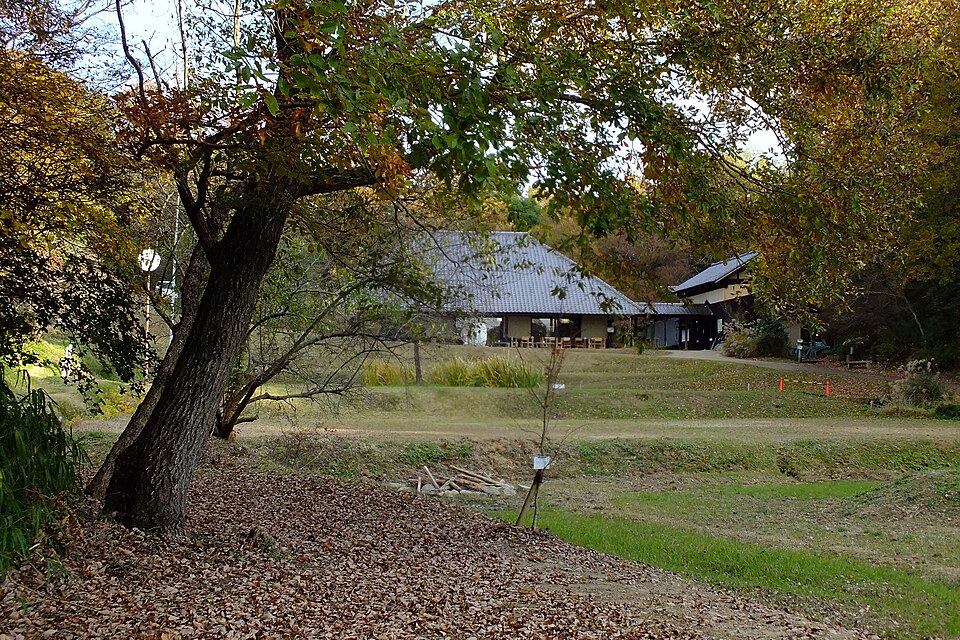
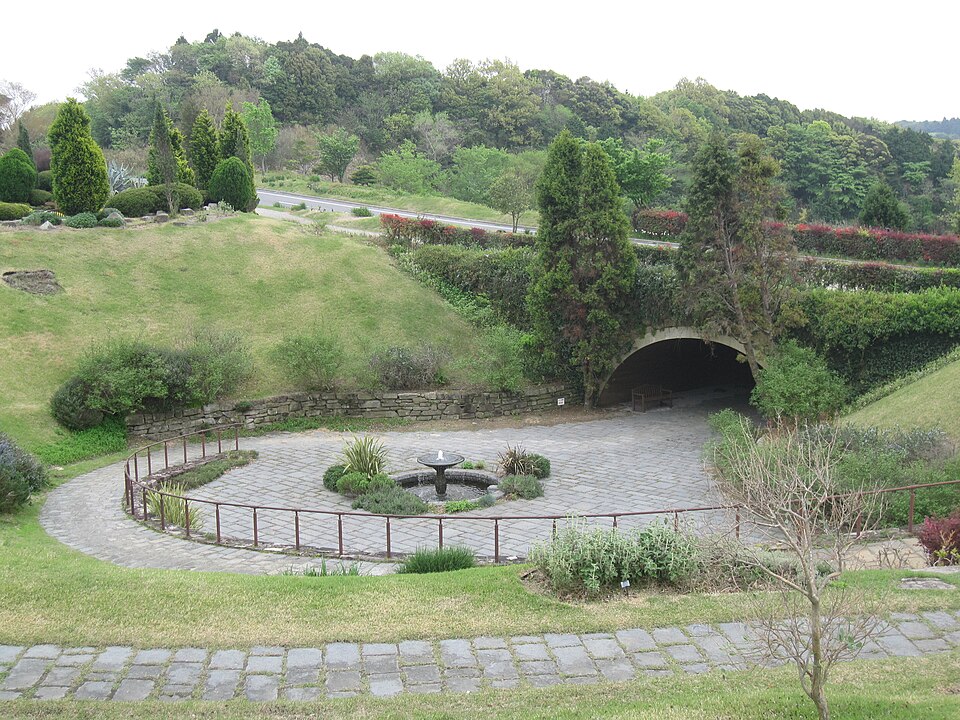
Real photos of the region. Select an image to enlarge it.
 Enlarge ↗
 Enlarge ↗
Scenery you have never seen, flavors you never knew, people you would never otherwise meet. A journey to feel this beautiful Japan closer.
Start the journey


_and_Cherry_blossoms_in_Tamba-Sasayama.DSCF5758.jpg)


.jpg)