
 Kanazawa
Ozaki Jinja (Kanazawa)
Called the Nikko of the Hokuriku coast. A Toshogu built inside Kanazawa Castle.
See detailsJAPAN
Kanazawa artistry and the winds of Noto.
Pick a category that interests you and find the trip that suits you.
PICK UP
From entries with clearly licensed photos.
KanazawaCalled the Nikko of the Hokuriku coast. A Toshogu built inside Kanazawa Castle.
See details KanazawaGuillemMedina · CC BY-SA 4.0 ↗
 KanazawaTakeshi Kuboki · CC BY 2.0 ↗
 Wajima
One thousand and four small paddies on a slope running down to the sea. Lit up in winter.
See detailsIntroduced by city, ward, town and village within the prefecture.
 FEATUREIshikawa now (autumn)Autumn colors transform Kenrokuen Garden and Kakusenkei Gorge.See the feature Ray Swi-hymn · CC BY-SA 2.0
Check information useful for planning, for a fuller trip.
JAPAN GUIDE
No worries even on a first trip to Japan. Useful things to know, explained clearly.
See all guidesThis answer is a draft. It stays unpublished until legal review and source verification are complete. The answ…
Read the answer →This answer is a draft. It stays unpublished until legal review and source verification are complete. The answ…
Read the answer →This answer is a draft. It stays unpublished until legal review and source verification are complete. The answ…
Read the answer →REGIONAL SPECIALTIES
It is not only the big cities. The regions are full of charm, and special experiences you can only have in each place are waiting.
Value Village
Regional culture, tradition, food, sightseeing, nature and people. A directory that delivers the appeal of each to the whole world.
About Value Village
INSTAGRAM / 6
Local governments, tourism accounts and local posts are shown with official embeds. Photos are not stored on Value Village; they link to the original posts.
THINGS TO DO / 6
Choose from what you can only do here.
 01Stroll KenrokuenAdmire ponds, hills and carefully shaped trees in a celebrated garden.See related entries →Oilstreet · CC BY 2.502Walk the Chaya DistrictWalk past lattice-fronted teahouses in Kanazawa's historic quarter.See related entries →GuillemMedina · CC BY-SA 4.0
 03Try Gold-Leaf CraftDecorate a small object using the delicate gold leaf associated with Kanazawa.See related entries →先従隗始 · CC0
 04Eat at Omicho MarketSample Sea of Japan seafood and Kaga vegetables at the lively market.See related entries →the.Firebottle · CC BY-SA 2.0
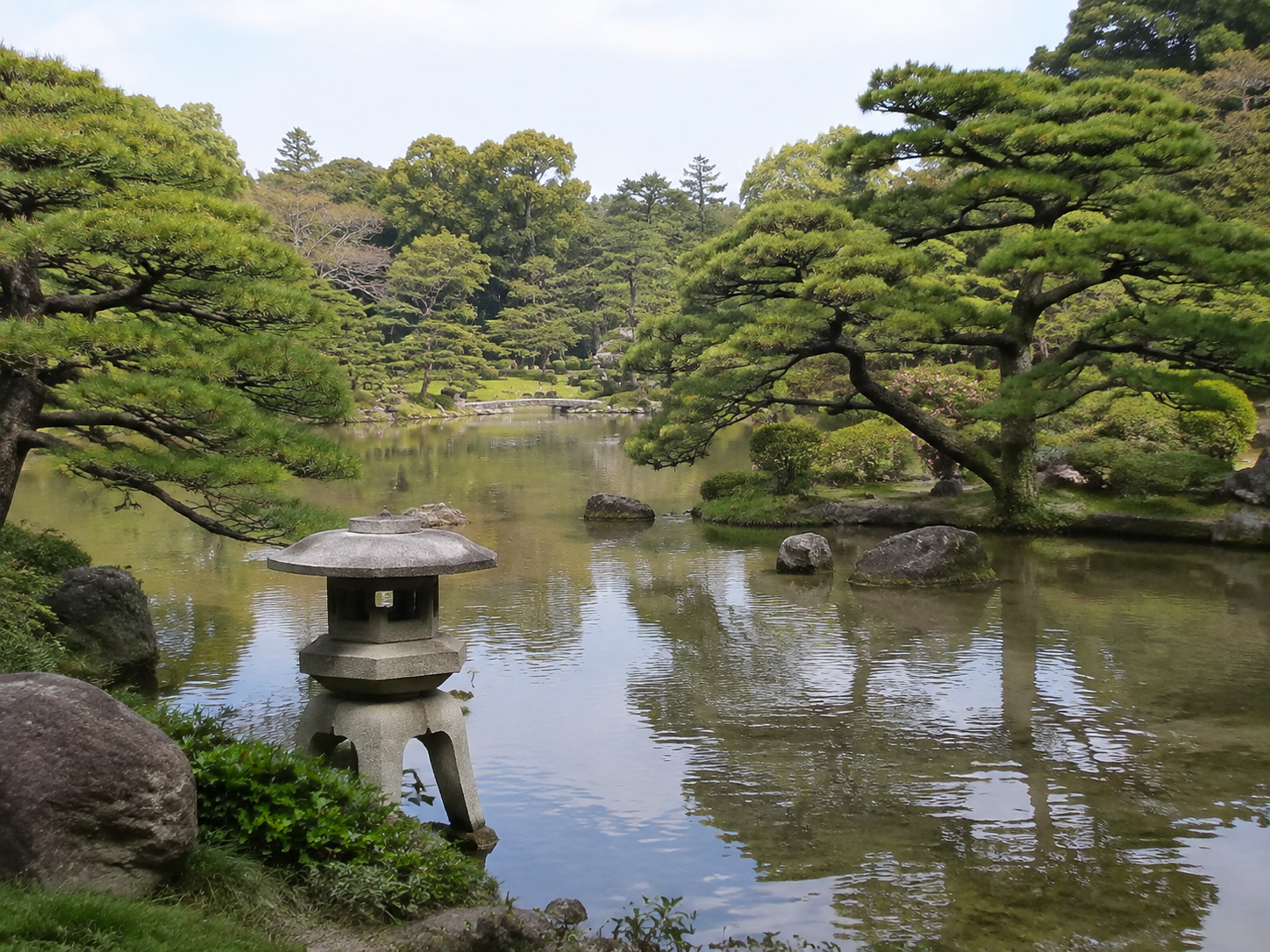 05Soak in Kaga OnsenExplore distinctive hot-spring towns and their traditional public baths.See related entries →AI-generated reference image
 06Explore Rural NotoEncounter coastal scenery, terraced fields and village life in Noto.See related entries →Makimoto · CC BY-SA 3.0
NEED TO KNOW
BEST TIME TO TRAVEL
 Alpsdake · CC BY-SA 3.0
Cherry blossoms lend elegance to Kenrokuen and Kanazawa Castle Park.
See recommendations for this season → Daderot · CC0
Alpine flowers on Mt. Hakusan and sea breezes along Noto offer relief from the heat.
See recommendations for this season →Ray Swi-hymn · CC BY-SA 2.0Autumn colors transform Kenrokuen Garden and Kakusenkei Gorge.
See recommendations for this season → Haya_BS · CC BY-SA 2.0
Enjoy snow-protected gardens and winter delicacies such as snow crab.
See recommendations for this season →LOCAL FOOD / 12
What people have long eaten in this place. We collect the dishes themselves, not restaurants.
Duck meat sliced thinly on the diagonal is dusted with wheat flour and simmered in dashi and soy sauce with sudare-fu wheat gluten, shiitake mushrooms and Japanese parsley. The wheat flour thickens the broth. Wasabi is heaped on top to finish. At home it is sometimes made with chicken.
Area:Throughout the prefecture
Source:Ministry of Agriculture, Forestry and Fisheries (MAFF), "Our Regional Cuisines"
A fermented food in which salted yellowtail is sandwiched between slices of salted turnip, topped with amazake (a sweet rice drink made with koji, or rice malt) and left to pickle for about a week to ten days. It is eaten as it is, with nothing added.
Area:Throughout the prefecture
Source:Ministry of Agriculture, Forestry and Fisheries (MAFF), "Our Regional Cuisines"
A fermented food in which daikon, dried herring and carrot are pickled with koji. It is taken out of the barrel and eaten with the koji still on it. Depending on the area, salted mackerel or salmon may be layered in.
Area:Throughout the prefecture
Source:Ministry of Agriculture, Forestry and Fisheries (MAFF), "Our Regional Cuisines"
Yellowtail collar or fillets, blanched and scaled, are simmered in a pot with daikon and kombu, seasoned with sake, ginger and sugar, and cooked under an otoshibuta (a lid set directly on the food). Finely shredded ginger is heaped on top.
Area:Throughout the prefecture
Source:Ministry of Agriculture, Forestry and Fisheries (MAFF), "Our Regional Cuisines"
A soup in which pork, sweet potato, daikon, carrot and burdock are brought to a boil in dashi and, once the vegetables are soft, miso is dissolved in. Konjac and taro are sometimes included.
Area:Throughout the prefecture
Source:Ministry of Agriculture, Forestry and Fisheries (MAFF), "Our Regional Cuisines"
Sea bream is stuffed in the belly with okara soy pulp that has been stir-fried and seasoned together with carrot, burdock, lotus root, shiitake mushrooms, ginkgo nuts and wood ear mushrooms, then steamed for 40 to 50 minutes. It is served on a large Kutani ware platter at celebratory banquets.
Area:Around Kanazawa
Source:Ministry of Agriculture, Forestry and Fisheries (MAFF), "Our Regional Cuisines"
A hot pot dish in which seasonal seafood and vegetables are simmered in a broth of ishiru, a fish sauce made from squid and fish, diluted with dashi. A version called kaiyaki, which uses a scallop shell in place of a pot, is also well known.
Area:Noto area
Source:Ministry of Agriculture, Forestry and Fisheries (MAFF), "Our Regional Cuisines"
Rice cooked together with dashi and turban shells that have been taken out of their shells and had their innards removed.
Area:Noto area
Source:Ministry of Agriculture, Forestry and Fisheries (MAFF), "Our Regional Cuisines"
Eggplant with slits cut into it is simmered in dashi, then pre-boiled somen noodles are added and the whole is brought to a boil once. It is usually seasoned with soy sauce, but some households make it with miso. It is eaten either warm or chilled.
Area:Around Kanazawa
Source:Ministry of Agriculture, Forestry and Fisheries (MAFF), "Our Regional Cuisines"
Kaga futo cucumber, with the skin and seeds removed, is cut into bite-sized pieces and parboiled, simmered with ground meat and shrimp, and thickened with kudzu starch or potato starch. Ginger is sometimes heaped on top.
Area:Around Kanazawa
Source:Ministry of Agriculture, Forestry and Fisheries (MAFF), "Our Regional Cuisines"
Agar is boiled until it dissolves, then beaten egg, sugar and soy sauce are added and the mixture is chilled until set. It is cut into bite-sized squares or triangles to serve. It is also called berobero.
Area:Throughout the prefecture
Source:Ministry of Agriculture, Forestry and Fisheries (MAFF), "Our Regional Cuisines"
A set of five sweets: a round mochi coated in red rice flour, a white steamed bun, a round mochi coated in yellow glutinous rice, a diamond-shaped mochi filled with smooth red bean paste, and a steamed yokan bean jelly. They are said to represent the sun, moon, mountains, sea and village, and are handed out in return for congratulatory gifts.
Area:Around Kanazawa
Source:Ministry of Agriculture, Forestry and Fisheries (MAFF), "Our Regional Cuisines"
MICHI-NO-EKI / 26
Rest facilities registered by Japan's national government. Each has parking and toilets open 24 hours, and by definition includes a facility that sells local products. This is where the making and the food of this prefecture can actually be bought.
There are 26 stations in this prefecture in all (national registry).
LOCAL ACCOUNTS / 3
Japanese-language accounts that post about this area.
These are third-party accounts. They are not affiliated with Value Village and this is not an endorsement.
CITIES & TOWNS / 13
Sorted by number of entries. Start from the name of a town.
INTERESTS / 14
Only the interests found in this prefecture.
 Shirayamahime Jinja · Maarten Heerlien · CC BY 2.0
Shirayamahime Jinja / Keta Taisha
To the list Chirihama · Shift · CC BY-SA 3.0
Chirihama / Cape Rokkozaki and Rokkozaki Lighthouse (Noroshi Lighthouse)
To the list Kaga Onsen · 663highland · CC BY-SA 4.0
Kaga Onsen
To the list Wajima Morning Market · Paul Keller · CC BY 2.0
Wajima Morning Market / Omicho Market
To the list Kanazawa-jo · Fumihiko Ueno · CC BY 3.0
Kanazawa-jo
To the listYukizuri
To the listKenrokuen · Oilstreet · CC BY 2.5Kenrokuen / Higashi Chaya
To the list D.T. Suzuki Museum · kajikawa · CC BY 3.0
D.T. Suzuki Museum / Ishikawa Prefectural Museum of History
To the list Noto Kiriko · Narumi.SBT · CC BY-SA 4.0
Noto Kiriko / 21st Century Museum
To the listShiroyone Senmaida · みーすけ · CC0Shiroyone Senmaida / Oku-Noto Triennale
To the list Komatsu Awazu Factory · Behbeh · CC BY-SA 3.0
Komatsu Awazu Factory / Tsudakoma Head Office Plant
To the list Wakura Onsen · MLIT Japan (国土交通省) · CC BY 4.0
Wakura Onsen / Ishikawa Nanao Art Museum
To the list Ohi Ware · KimonBerlin · CC BY-SA 2.0
Ohi Ware / Kobori Shuzoten Manzairaku
To the listKomatsu-no-Mori · 先従隗始 · CC0Komatsu-no-Mori / Ishikawa Zoo
To the listHIGHLIGHTS
From entries with clearly licensed photos.
 Shrines & Temples
Hakusan stands with Fuji and Tateyama as one of the three sacred mountains of Japan. What this shrine venerates is water. Snow that falls on Hakusan becomes the Tedori and Kuzuryu rivers and waters the plain. The rice, the sake and the yuzen-nagashi rinsing all depend on it. The inner shrine sits at the 2,702-metre summit.
 Art & Crafts
Huge votive lanterns move through the town at night. Recognised as Japan Heritage.
ArchitectureOne of the three great gardens of Japan, known for its winter snow ropes and the Kotoji lantern.
 Castles & History
Stone walls in the Ano-shu style. The Hishi turret and the Gojikken Nagaya have been rebuilt.
 Nature & Scenery
You can drive along the water's edge. The sand grains are fine enough to pack hard, which is what makes it possible.
 Historic Districts
Said to have run for a thousand years. Note: damaged in the 2024 earthquake; reopening is under way.
SMILE NEWS / 136
Stories that lift your spirits a little, collected with their sources.
On October 7, Ishikawa Prefecture released nine Japanese crested ibises that had been acclimatizing in a temporary cage near the Haruki district of Nakanoto Town. It was the second release in the Noto area, and all nine birds took flight, heading toward Mt. Bijo, Mt. Sekido and Nanao.
source: IshikawaIshikawa Prefecture has released videos on its official YouTube channel and website about the crested ibis release held in the Noto area on May 31, the first on Japan's main island of Honshu. The prefecture says the ibis has returned to Noto's skies after half a century.
source: IshikawaIR Ishikawa Railway will hold "IR Ishikawa Railway Festa 2026" at the Kanazawa Station concourse and nearby areas from 10:00 to 16:00 on October 17. Plans include a talk show, railway diorama and Plarail displays, a crossing-signal experience and railway goods sales.
source: IR Ishikawa RailwayHashtags often used for this area. Each opens the tag page on Instagram.
SEASONS & EVENTS
2026-10-17 ~ 2026-10-17
2026-11-07 ~ 2026-11-29
Ishikawa
BEFORE YOU GO
TRAVEL
Scenery you have never seen, flavors you never knew, people you would never otherwise meet. A journey to feel this beautiful Japan closer.
Start the journey


.jpg)
