
 Hiroshima
Tahoto
A pagoda moved here from Wakayama, brought to console the victims of the atomic bomb.
See detailsJAPAN
Peace, islands and open horizons.
Pick a category that interests you and find the trip that suits you.
PICK UP
From entries with clearly licensed photos.
HiroshimaA pagoda moved here from Wakayama, brought to console the victims of the atomic bomb.
See details Fukuyama
Its Noh stage is a demountable one tied to Hideyoshi, and an Important Cultural Property. The tutelary shrine of a port where ships waited for the tide.
See details Fukuyama
A kakezukuri hall thrust out over the Ashida river. Its new year crowds are among the largest in the prefecture.
See details Hatsukaichi
The fire Kukai lit has not gone out in 1,200 years. It was the source of the flame in the Hiroshima Peace Memorial Park.
See detailsIntroduced by city, ward, town and village within the prefecture.
 HiroshimaArchitecture, Shrines & Temples · 21 entries
 OnomichiShrines & Temples, Architecture · 15 entriesHatsukaichiShrines & Temples, Nature & Scenery · 12 entriesFukuyamaShrines & Temples, Art & Crafts · 12 entries
 KureShrines & Temples, Architecture · 7 entries
 MiyoshiShrines & Temples, Art & Crafts · 4 entries
 FEATUREHiroshima now (autumn)Momijidani Park and Taishakukyo Gorge glow with autumn color.See the feature HKT3012 · CC BY-SA 4.0
Check information useful for planning, for a fuller trip.
JAPAN GUIDE
No worries even on a first trip to Japan. Useful things to know, explained clearly.
See all guidesThis answer is a draft. It stays unpublished until legal review and source verification are complete. The answ…
Read the answer →This answer is a draft. It stays unpublished until legal review and source verification are complete. The answ…
Read the answer →This answer is a draft. It stays unpublished until legal review and source verification are complete. The answ…
Read the answer →REGIONAL SPECIALTIES
It is not only the big cities. The regions are full of charm, and special experiences you can only have in each place are waiting.
Value Village
Regional culture, tradition, food, sightseeing, nature and people. A directory that delivers the appeal of each to the whole world.
About Value Village
INSTAGRAM / 6
Local governments, tourism accounts and local posts are shown with official embeds. Photos are not stored on Value Village; they link to the original posts.
THINGS TO DO / 6
Choose from what you can only do here.
 01Reflect on PeaceVisit the Atomic Bomb Dome and museum for a thoughtful encounter with history.See related entries →warabi hatogaya · CC BY 3.0
 02Explore MiyajimaSee the great sea gate and explore Itsukushima Shrine and the island town.See related entries →OS6 · CC BY-SA 3.0
 03Cycle ShimanamiCycle across island-linking bridges amid sweeping Seto Inland Sea views.See related entries →CC BY-SA 3.0
 04Wander OnomichiFollow temple paths, alleys and cat-dotted slopes above the port.See related entries →ノボホショコロトソ · CC BY 4.0
 05Taste Local OystersEnjoy plump Hiroshima Bay oysters, especially freshly grilled in season.See related entries →usainohugahuga · CC BY 3.0
 06Cook OkonomiyakiLearn to layer noodles, cabbage and batter in distinctive Hiroshima style.See related entries →cytech · CC BY 2.0
NEED TO KNOW
BEST TIME TO TRAVEL
 Tim Vickerman. Vickerman625 · Public domain
Walk through cherry blossoms on Miyajima and along Onomichi's hillside lanes.
See recommendations for this season → 岡田清編 , 山野峻峯斎画 · Public domain
Cycle between Seto Inland Sea islands and linger by the water.
See recommendations for this season →HKT3012 · CC BY-SA 4.0Momijidani Park and Taishakukyo Gorge glow with autumn color.
See recommendations for this season → m-louis .® · CC BY-SA 2.0
Savor peak-season oysters, tranquil Miyajima and snowy scenery in the north.
See recommendations for this season →LOCAL FOOD / 18
What people have long eaten in this place. We collect the dishes themselves, not restaurants.
Batter spread thin and round on a hot plate, layered with cabbage, bean sprouts and pork and steamed under cover, then joined with noodles and egg and finished with sauce and green laver.
Area:Throughout Hiroshima Prefecture
Pacific oysters farmed in Hiroshima Bay. Eaten raw, grilled or fried. Farming dates from the Muromachi period, and the bay supplies about 60 percent of Japan's output.
Area:Hiroshima Bay coast
Miso spread like a bank around the rim of an earthenware pot; oysters, tofu, shiitake, chrysanthemum greens, spring onion and shirataki are simmered, and the miso is scraped in to adjust the seasoning.
Area:Hiroshima, Etajima, Miyajima and Kure
Source:Ministry of Agriculture, Forestry and Fisheries (MAFF), "Our Regional Cuisines"
Rice cooked in broth taken from conger eel bones, topped with conger grilled in a glaze of soy sauce, sake and mirin. It began as a station lunchbox in 1901.
Area:Miyajima-cho in Hatsukaichi, and Hiroshima
Source:Ministry of Agriculture, Forestry and Fisheries (MAFF), "Our Regional Cuisines"
Sponge-like batter baked in the shape of a maple leaf and filled with smooth bean paste or other fillings. It was created on Miyajima in the Meiji era.
Area:Miyajima, Hatsukaichi
Noodles without soup, tossed hard with a sauce made hot with sansho, Sichuan pepper and chilli oil. It was devised in the early 2000s.
Area:Hiroshima
Cold noodles dipped in a hot sauce of soy sauce, chilli, chilli oil, vinegar and sesame, served with boiled cabbage, cucumber, spring onion and roast pork.
Area:Around Hiroshima
Soy-flavoured broth of chicken bones and small Seto Inland Sea fish, with pork back fat floating on top and flat noodles. Topped with roast pork, bamboo shoots and spring onion.
Area:Onomichi
Pork-bone and chicken-bone broth seasoned with soy sauce, with straight noodles and boiled bean sprouts.
Area:Hiroshima
Firm flat noodles in a cold, sweet-sour and mildly hot broth. Vinegared chilli is added at the table to change the taste.
Area:Kure
Sea bream, prawn, taro, carrot, shiitake and tofu placed in a bowl with broth, then hidden under a covering of rice. The name comes from burying the ingredients.
Area:Fukuyama
Source:Ministry of Agriculture, Forestry and Fisheries (MAFF), "Our Regional Cuisines"
Chicken, pork and gizzard with Chinese cabbage and spring onion, seasoned with nothing but salt, pepper and sake. It is said to come from the staff meals of sake brewers.
Area:Saijo area, Higashihiroshima
Source:Ministry of Agriculture, Forestry and Fisheries (MAFF), "Our Regional Cuisines"
Octopus cooked into rice with carrot, burdock and fried tofu in dashi, soy sauce and sake. It is said to come from fishermen's cooking on board.
Area:Mihara, Onomichi and Fukuyama
Source:Ministry of Agriculture, Forestry and Fisheries (MAFF), "Our Regional Cuisines"
Anchovy washed repeatedly in salted ice water, opened by hand and eaten with grated ginger and soy sauce. The season runs from June to August.
Area:Ondo-cho and Kurahashi-cho, Kure
Source:Ministry of Agriculture, Forestry and Fisheries (MAFF), "Our Regional Cuisines"
Shark meat sliced thin and eaten with ginger and soy sauce. It has been eaten at festivals and New Year in the north of the prefecture, far from the sea. Locally shark is called wani.
Area:Miyoshi and Shobara
Source:Ministry of Agriculture, Forestry and Fisheries (MAFF), "Our Regional Cuisines"
Beef fried and seasoned with sugar and soy sauce, then simmered with potato, shirataki and onion. It is said to derive from navy cooking.
Area:Kure
Source:Ministry of Agriculture, Forestry and Fisheries (MAFF), "Our Regional Cuisines"
Adzuki beans simmered with finely chopped daikon, carrot, burdock, lotus root, taro, dried shiitake, konjac and fried tofu. No meat or fish is used. Eaten around 16 January for the Hoonko memorial.
Area:Western Hiroshima Prefecture and Fuchu
Source:Ministry of Agriculture, Forestry and Fisheries (MAFF), "Our Regional Cuisines"
Boiled wakegi onions dressed in a vinegared miso of white miso, sugar, vinegar and mirin. Octopus, clams or fried tofu may be added. Eaten at the Doll Festival.
Area:Onomichi, Mihara and Kure
Source:Ministry of Agriculture, Forestry and Fisheries (MAFF), "Our Regional Cuisines"
MICHI-NO-EKI / 21
Rest facilities registered by Japan's national government. Each has parking and toilets open 24 hours, and by definition includes a facility that sells local products. This is where the making and the food of this prefecture can actually be bought.
There are 21 stations in this prefecture in all (national registry).
LOCAL ACCOUNTS / 2
Japanese-language accounts that post this city's food, day after day. They are not made for overseas audiences.
These are third-party accounts. They are not affiliated with Value Village and this is not an endorsement.
CITIES & TOWNS / 17
Sorted by number of entries. Start from the name of a town.
INTERESTS / 11
Only the interests found in this prefecture.
Itsukushima Jinja · usainohugahuga · CC BY 3.0Itsukushima Jinja / Senjokaku
To the list Miyajima · sanagi-map · CC BY-SA 3.0
Miyajima / Kita-no-Sekishuku Akitakata Roadside Station
To the listOnomichi · ノボホショコロトソ · CC BY 4.0Onomichi / Tennen Onsen Kurahashi Katsurahama Onsen-kan
To the list Genbaku Dome · RuinDig/Yuki Uchida · CC BY 4.0
Genbaku Dome / Shimanami Kaido
To the listPeace Memorial Museum · warabi hatogaya · CC BY 3.0Peace Memorial Museum / Yamato Museum
To the list Hiroshima Prefectural Art Museum · Taisyo · CC BY 3.0
Hiroshima Prefectural Art Museum / Hiroshima MOCA
To the list Sandankyo · かるちる · CC0
Sandankyo / Taishakukyo
To the list Fudenosato Kobo · Nobuyuki Kondo · CC BY 2.0
Fudenosato Kobo / Mazda Head Office Plant
To the list Nagatsuka Shrine Honden (A-Bombed Building) · かるちる · CC0
Nagatsuka Shrine Honden (A-Bombed Building) / Motomachi Cred-Pacela
To the listOtafuku Sauce Head Office Factory · cytech · CC BY 2.0Otafuku Sauce Head Office Factory / Calbee Hiroshima Factory
To the listPeace Memorial Park · warabi hatogaya · CC BY 3.0Peace Memorial Park / Norosan
To the listHIGHLIGHTS
From entries with clearly licensed photos.
 Shrines & Temples
This shrine stands out over the sea because the island itself is the deity. No earthworks may be cut into a god's island, so they built on the water. A restriction of belief became, exactly as it is, a World Heritage view. Taira no Kiyomori is said to have given it its present form.
 Architecture
A World Heritage site of the negative kind. It keeps the memory of 6 August 1945 exactly as it is.
 Museums
Designed by Tange Kenzo. It receives 1.7 million visitors a year.
 Nature & Scenery
One of the three great views of Japan. The island itself is the deity, so the halls were built without cutting into the ground.
 Historic Districts
Twenty-five temples and narrow slopes. The setting of Ozu Yasujiro's Tokyo Story.
 Contemporary Art
SMILE NEWS / 136
Stories that lift your spirits a little, collected with their sources.
Miyajima Aquarium opened a 15th-anniversary special exhibition on October 10 that presents a 'living picture book' of insects. The first-floor exhibition room shows 160 living creatures of 14 species, letting visitors observe live insects up close until November 30.
source: Miyajima AquariumThe Sake Festival will be held on October 10 and 11 in Saijo, Higashihiroshima. A venue map and schedule were published on September 29, and tickets for the signature bishu-nabe hot pot on the 11th are back on sale until October 4.
source: Sake Matsuri official siteIn Chile's Patagonia National Park, a women-led ranger team returned 13 Darwin's rheas to the wild in April 2026. Working with the Rewilding Chile Foundation, they care for the birds around the clock; surveys once estimated only about 11 to 15 remained.
source: MongabayHashtags often used for this area. Each opens the tag page on Instagram.
SEASONS & EVENTS
2026-10-31 ~ 2026-11-01
2026-12-04 ~ 2027-01-24
Hiroshima
BEFORE YOU GO
TRAVEL
Real photos of the region. Select an image to enlarge it.
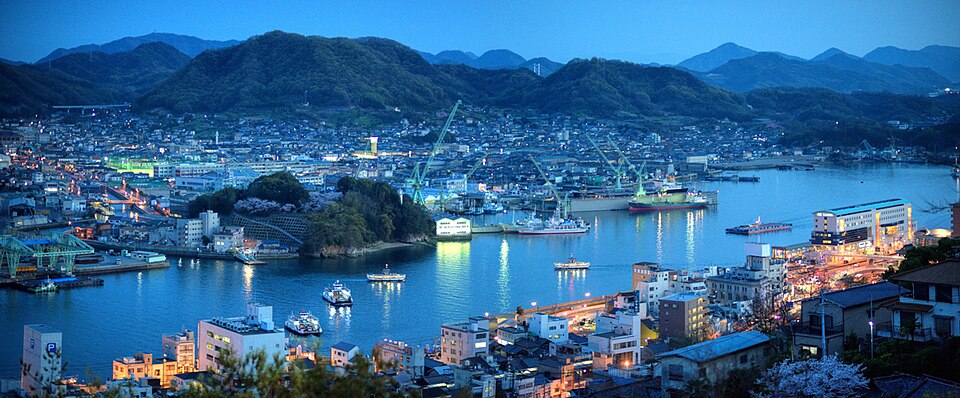 Enlarge ↗
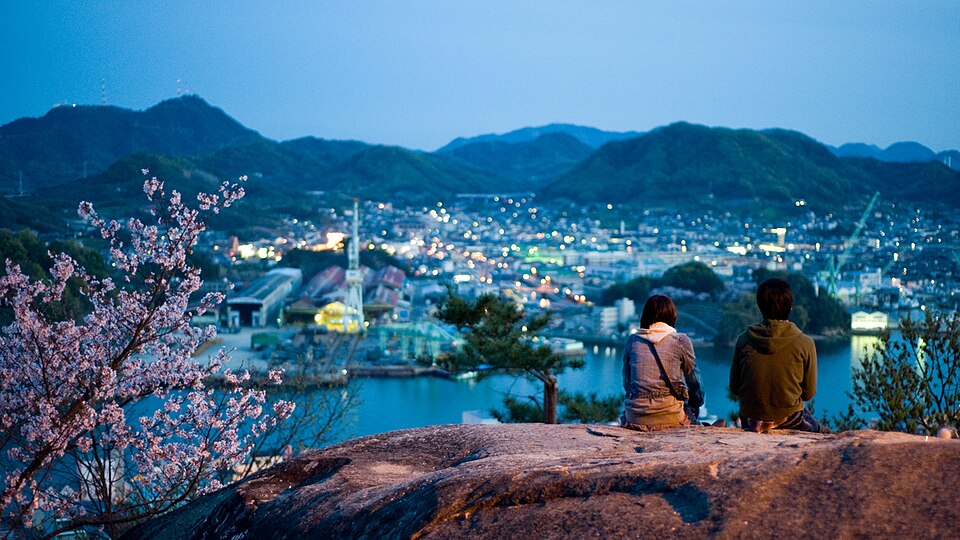 Enlarge ↗
Scenery you have never seen, flavors you never knew, people you would never otherwise meet. A journey to feel this beautiful Japan closer.
Start the journey


.jpg)